General Internet Corpus of Russian (GICR) is a corpus of Russian internet texts that has been accessible on request through an online query interface since 2013. The corpus includes rich text materials from the blogosphere, social networks, major news sources and literary magazines. == Goals of the project == The project has the status of an educational and scientific one, and many tasks of computational linguistics are solved by independent researchers and research groups with the materials obtained by GICR. While other corpus projects of Russian are focused on fiction and edited texts, General Internet Corpus provides linguists timely opportunity to learn the language as it is, with all the slang and regional peculiarities. Corpus gives the opportunity to carry out research in Linguistic research of a wide range: dialectological research, study of word distribution, study of the language of the social networks, study of the influence of gender, age and other factors on the language, frequency of words, fixed expressions and different constructions, stylistic features of texts of different segments of the Internet, etc. Social media analysis Corpus-based machine learning for evaluating automatic tagging At various times, student papers and independent researches were carried out on the project material by students, graduates and employees of MSU, MIPT, Russian State Humanitarian University, Novosibirsk State University, Higher School of Economics, Russian Academy of Sciences, SFU, CSU, SGMP, IAAS of MSU. Scientific project leaders: Belikov V. - RSUH, Moscow, Russia Selegey V. - RSUH, ABBYY, Moscow, Russia Sharoff S. - RSUH, Moscow, Russia; University of Leeds, UK The organizations involved in support of GICR: Russian State University of Humanities ABBYY Company Moscow Institute of Physics and Technology Skolkovo Institute of Science and Technology == Size and content of the corpus == Corpus size for the summer 2016 is 19.8 billion tokens, of which 49% are from VKontakte, 40% are from LiveJournal, another 4% - from Mail.ru Blogs and News, and 2% - from Russian Magazine Hall. The sources collected in news segment are: RIA Novosti, Regnum, Lenta.ru, Rosbalt. Texts are provided with metamarkup (by date of creation of the text, sex, place and year of birth of the author, Internet genre, etc.); all texts are provided with automatic morphological tagging and lemmatization. Most of the texts collected are of 2013–2014 years of creation, although in some segments, such as in Russian Magazine Hall, there are some texts collected since 1994. GICR is one of the few mega-corpora projects nowadays, which means its available size is reaching several billion of words. == Access == Currently the interface of GICR is in beta stage, so access to the search in the corpora is provided and is free, but is available for researchers on request.
Robot Monk Xian'er
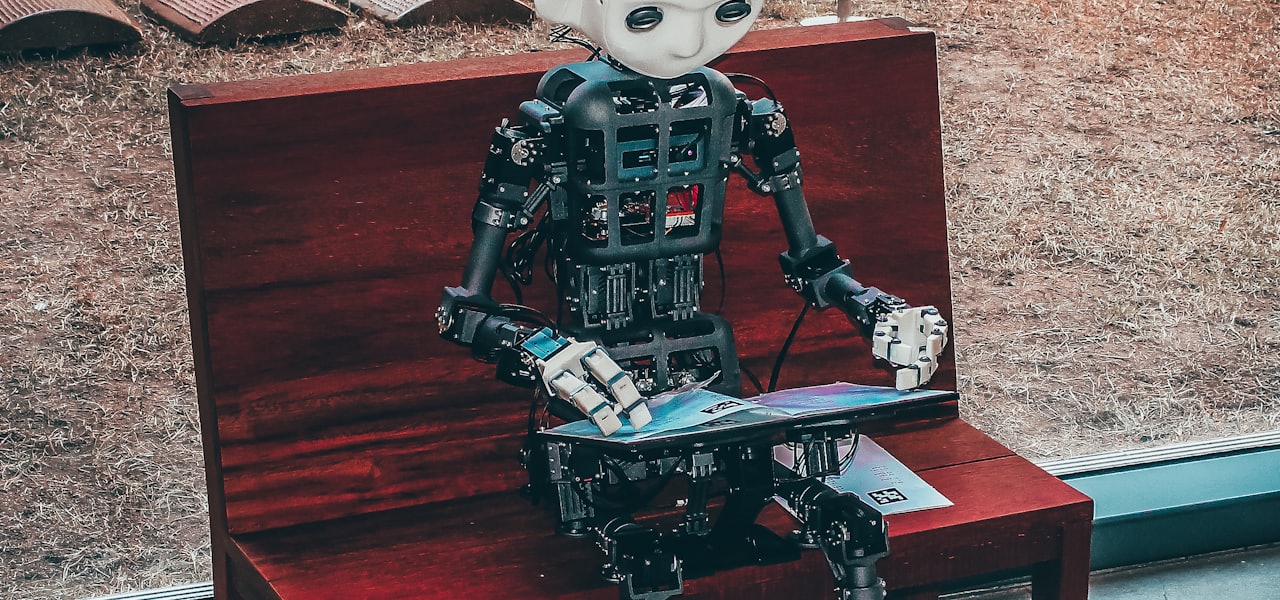
Robot Monk Xian'er (Chinese: 贤二机器僧) is a humanoid robot based on the cartoon character Xian'er. It was developed by a team of monks, volunteers and AI experts from Beijing Longquan Monastery in Beijing, China. He can follow human instructions to make body movements, read scriptures and play Buddhist music. He can chat and respond to people's emotional and spiritual questions with Buddhist wisdom. As a chatbot, Robot Monk Xian'er is available on certain public platforms including WeChat and Facebook. Over the years, master Xuecheng, the abbot of Beijing Longquan Monastery, replied to thousands of questions on Sina Weibo. These questions and their answers become the data source of the chatbot.
Multimodal representation learning
Multimodal representation learning is a subfield of representation learning focused on integrating and interpreting information from different modalities, such as text, images, audio, or video, by projecting them into a shared latent space. This allows for semantically similar content across modalities to be mapped to nearby points within that space, facilitating a unified understanding of diverse data types. By automatically learning meaningful features from each modality and capturing their inter-modal relationships, multimodal representation learning enables a unified representation that enhances performance in cross-media analysis tasks such as video classification, event detection, and sentiment analysis. It also supports cross-modal retrieval and translation, including image captioning, video description, and text-to-image synthesis. == Motivation == The primary motivations for multimodal representation learning arise from the inherent nature of real-world data and the limitations of unimodal approaches. Since multimodal data offers complementary and supplementary information about an object or event from different perspectives, it is more informative than relying on a single modality. A key motivation is to narrow the heterogeneity gap that exists between different modalities by projecting their features into a shared semantic subspace. This allows semantically similar content across modalities to be represented by similar vectors, facilitating the understanding of relationships and correlations between them. Multimodal representation learning aims to leverage the unique information provided by each modality to achieve a more comprehensive and accurate understanding of concepts. These unified representations are crucial for improving performance in various cross-media analysis tasks such as video classification, event detection, and sentiment analysis. They also enable cross-modal retrieval, allowing users to search and retrieve content across different modalities. Additionally, it facilitates cross-modal translation, where information can be converted from one modality to another, as seen in applications like image captioning and text-to-image synthesis. The abundance of ubiquitous multimodal data in real-world applications, including understudied areas like healthcare, finance, and human-computer interaction (HCI), further motivates the development of effective multimodal representation learning techniques. == Approaches and methods == === Canonical-correlation analysis based methods === Canonical-correlation analysis (CCA) was first introduced in 1936 by Harold Hotelling and is a fundamental approach for multimodal learning. CCA aims to find linear relationships between two sets of variables. Given two data matrices X ∈ R n × p {\displaystyle X\in \mathbb {R} ^{n\times p}} and Y ∈ R n × q {\displaystyle Y\in \mathbb {R} ^{n\times q}} representing different modalities, CCA finds projection vectors w x ∈ R p {\displaystyle w_{x}\in \mathbb {R} ^{p}} and w y ∈ R q {\displaystyle w_{y}\in \mathbb {R} ^{q}} that maximizes the correlation between the projected variables: ρ = max w x , w y w x ⊤ Σ x y w y w x ⊤ Σ x x w x w y ⊤ Σ y y w y {\displaystyle \rho =\max _{w_{x},w_{y}}{\frac {w_{x}^{\top }\Sigma _{xy}w_{y}}{{\sqrt {w_{x}^{\top }\Sigma _{xx}w_{x}}}{\sqrt {w_{y}^{\top }\Sigma _{yy}w_{y}}}}}} such that Σ x x {\displaystyle \Sigma _{xx}} and Σ y y {\displaystyle \Sigma _{yy}} are the within-modality covariance matrices, and Σ x y {\displaystyle \Sigma _{xy}} is the between-modality covariance matrix. However, standard CCA is limited by its linearity, which led to the development of nonlinear extensions, such as kernel CCA and deep CCA. ==== Kernel CCA ==== Kernel canonical correlation analysis (KCCA) extends traditional CCA to capture nonlinear relationships between modalities by implicitly mapping the data into high dimensional feature spaces using kernel functions. Given kernel functions K x {\displaystyle K_{x}} and K y {\displaystyle K_{y}} with corresponding Gram matrices K x ∈ R n × n {\displaystyle K_{x}\in \mathbb {R} ^{n\times n}} and K y ∈ R n × n {\displaystyle K_{y}\in \mathbb {R} ^{n\times n}} , KCCA seeks coefficients α {\displaystyle \alpha } and β {\displaystyle \beta } that maximize: ρ = max α , β α ⊤ K x K y β α ⊤ K x 2 α β ⊤ K y 2 β {\displaystyle \rho =\max _{\alpha ,\beta }{\frac {\alpha ^{\top }K_{x}Ky\beta }{{\sqrt {\alpha ^{\top }K_{x}^{2}\alpha }}{\sqrt {\beta ^{\top }K_{y}^{2}\beta }}}}} To prevent overfitting, regularization terms are typically added, resulting in: ρ = max α , β α T K x K y β α T ( K x 2 + λ x K x ) α β T ( K y 2 + λ y K y ) β {\displaystyle \rho =\max _{\alpha ,\beta }{\frac {\alpha ^{T}K_{x}K_{y}\beta }{{\sqrt {\alpha ^{T}\left(K_{x}^{2}+\lambda _{x}K_{x}\right)\alpha }}{\sqrt {\;\beta ^{T}\left(K_{y}^{2}+\lambda _{y}K_{y}\right)\beta }}}}} where λ x {\displaystyle \lambda _{x}} and λ y {\displaystyle \lambda _{y}} are regularization parameters. KCCA has proven effective for tasks such as cross-modal retrieval and semantic analysis, though it faces computational challenges with large datasets due to its O ( n 2 ) {\displaystyle O(n^{2})} memory requirement for sorting kernel matrices. KCCA was proposed independently by several researchers. ==== Deep CCA ==== Deep canonical correlation analysis (DCCA), introduced in 2013, employs neural networks to learn nonlinear transformations for maximizing the correlation between modalities. DCCA uses separate neural networks f x {\displaystyle f_{x}} and f y {\displaystyle f_{y}} for each modality to transform the original data before applying CCA: max W x , W y , θ x , θ y corr ( f x ( X ; θ x ) , f y ( Y ; θ y ) ) {\displaystyle \max _{W_{x},W_{y},\theta _{x},\theta _{y}}\operatorname {corr} \left(f_{x}(X;\theta _{x}),f_{y}(Y;\theta _{y})\right)} where θ x {\displaystyle \theta _{x}} and θ y {\displaystyle \theta _{y}} represent the parameters of the neural networks, and W x {\displaystyle W_{x}} and W y {\displaystyle W_{y}} are the CCA projection matrices. The correlation objective is computed as: corr ( H x , H y ) = tr ( T − 1 / 2 H x T H y S − 1 / 2 ) {\displaystyle \operatorname {corr} (H_{x},H_{y})=\operatorname {tr} \left(T^{-1/2}H_{x}^{T}H_{y}S^{-1/2}\right)} where H x = f x ( X ) {\displaystyle H_{x}=f_{x}(X)} and H y = f y ( Y ) {\displaystyle H_{y}=f_{y}(Y)} are the network outputs, T = H x T H x + r x I {\displaystyle T=H_{x}^{T}H_{x}+r_{x}I} , S = H y T H y + r y I {\displaystyle S=H_{y}^{T}H_{y}+r_{y}I} and r x , r y {\displaystyle r_{x},r_{y}} are the regularization parameters. DCCA overcomes the limitations of linear CCA and kernel CCA by learning complex nonlinear relationships while maintaining computational efficiency for large datasets through mini-batch optimization. === Graph-based methods === Graph-based approaches for multimodal representation learning leverage graph structure to model relationships between entities across different modalities. These methods typically represent each modality as a graph and then learn embedding that preserve cross-modal similarities, enabling more effective joint representation of heterogeneous data. One such method is cross-modal graph neural networks (CMGNNs) that extend traditional graph neural networks (GNNs) to handle data from multiple modalities by constructing graphs that capture both intra-modal and inter-modal relationships. These networks model interactions across modalities by representing them as nodes and their relationships as edges. Other graph-based methods include Probabilistic Graphical Models (PGMs) such as deep belief networks (DBN) and deep Boltzmann machines (DBM). These models can learn a joint representation across modalities, for instance, a multimodal DBN achieves this by adding a shared restricted Boltzmann Machine (RBM) hidden layer on top of modality-specific DBNs. Additionally, the structure of data in some domains like Human-Computer Interaction (HCI), such as the view hierarchy of app screens, can potentially be modeled using graph-like structures. The field of graph representation learning is also relevant, with ongoing progress in developing evaluation benchmarks. === Diffusion maps === Another set of methods relevant to multimodal representation learning are based on diffusion maps and their extensions to handle multiple modalities. ==== Multi-view diffusion maps ==== Multi-view diffusion maps address the challenge of achieving multi-view dimensionality reduction by effectively utilizing the availability of multiple views to extract a coherent low-dimensional representation of the data. The core idea is to exploit both the intrinsic relations within each view and the mutual relations between the different views, defining a cross-view model where a random walk process implicitly hops between objects in different views. A multi-view kernel matrix is constructed by combining these relations, defining a cross-view diffusion process and associ
ELMo
ELMo (embeddings from language model) is a word embedding method for representing a sequence of words as a corresponding sequence of vectors. It was created by researchers at the Allen Institute for Artificial Intelligence, and University of Washington and first released in February 2018. It is a bidirectional LSTM which takes character-level as inputs and produces word-level embeddings, trained on a corpus of about 30 million sentences and 1 billion words. The architecture of ELMo accomplishes a contextual understanding of tokens. Deep contextualized word representation is useful for many natural language processing tasks, such as coreference resolution and polysemy resolution. ELMo was historically important as a pioneer of self-supervised generative pretraining followed by fine-tuning, where a large model is trained to reproduce a large corpus, then the large model is augmented with additional task-specific weights and fine-tuned on supervised task data. It was an instrumental step in the evolution towards transformer-based language modelling. == Architecture == ELMo is a multilayered bidirectional LSTM on top of a token embedding layer. The output of all LSTMs concatenated together consists of the token embedding. The input text sequence is first mapped by an embedding layer into a sequence of vectors. Then two parts are run in parallel over it. The forward part is a 2-layered LSTM with 4096 units and 512 dimension projections, and a residual connection from the first to second layer. The backward part has the same architecture, but processes the sequence back-to-front. The outputs from all 5 components (embedding layer, two forward LSTM layers, and two backward LSTM layers) are concatenated and multiplied by a linear matrix ("projection matrix") to produce a 512-dimensional representation per input token. ELMo was pretrained on a text corpus of 1 billion words. The forward part is trained by repeatedly predicting the next token, and the backward part is trained by repeatedly predicting the previous token. After the ELMo model is pretrained, its parameters are frozen, except for the projection matrix, which can be fine-tuned to minimize loss on specific language tasks. This is an early example of the pretraining-fine-tune paradigm. The original paper demonstrated this by improving state of the art on six benchmark NLP tasks. === Contextual word representation === The architecture of ELMo accomplishes a contextual understanding of tokens. For example, the first forward LSTM of ELMo would process each input token in the context of all previous tokens, and the first backward LSTM would process each token in the context of all subsequent tokens. The second forward LSTM would then incorporate those to further contextualize each token. Deep contextualized word representation is useful for many natural language processing tasks, such as coreference resolution and polysemy resolution. For example, consider the sentenceShe went to the bank to withdraw money.In order to represent the token "bank", the model must resolve its polysemy in context. The first forward LSTM would process "bank" in the context of "She went to the", which would allow it to represent the word to be a location that the subject is going towards. The first backward LSTM would process "bank" in the context of "to withdraw money", which would allow it to disambiguate the word as referring to a financial institution. The second forward LSTM can then process "bank" using the representation vector provided by the first backward LSTM, thus allowing it to represent it to be a financial institution that the subject is going towards. == Historical context == ELMo is one link in a historical evolution of language modelling. Consider a simple problem of document classification, where we want to assign a label (e.g., "spam", "not spam", "politics", "sports") to a given piece of text. The simplest approach is the "bag of words" approach, where each word in the document is treated independently, and its frequency is used as a feature for classification. This was computationally cheap but ignored the order of words and their context within the sentence. GloVe and Word2Vec built upon this by learning fixed vector representations (embeddings) for words based on their co-occurrence patterns in large text corpora. Like BERT (but unlike "bag of words" such as Word2Vec and GloVe), ELMo word embeddings are context-sensitive, producing different representations for words that share the same spelling. It was trained on a corpus of about 30 million sentences and 1 billion words. Previously, bidirectional LSTM was used for contextualized word representation. ELMo applied the idea to a large scale, achieving state of the art performance. After the 2017 publication of Transformer architecture, the architecture of ELMo was changed from a multilayered bidirectional LSTM to a Transformer encoder, giving rise to BERT. BERT has a similar pretrain-fine-tune workflow, but uses a Transformer with implications for more parallelizable training.
Coupled pattern learner
Coupled Pattern Learner (CPL) is a machine learning algorithm which couples the semi-supervised learning of categories and relations to forestall the problem of semantic drift associated with boot-strap learning methods. == Coupled Pattern Learner == Semi-supervised learning approaches using a small number of labeled examples with many unlabeled examples are usually unreliable as they produce an internally consistent, but incorrect set of extractions. CPL solves this problem by simultaneously learning classifiers for many different categories and relations in the presence of an ontology defining constraints that couple the training of these classifiers. It was introduced by Andrew Carlson, Justin Betteridge, Estevam R. Hruschka Jr. and Tom M. Mitchell in 2009. == CPL overview == CPL is an approach to semi-supervised learning that yields more accurate results by coupling the training of many information extractors. Basic idea behind CPL is that semi-supervised training of a single type of extractor such as ‘coach’ is much more difficult than simultaneously training many extractors that cover a variety of inter-related entity and relation types. Using prior knowledge about the relationships between these different entities and relations CPL makes unlabeled data as a useful constraint during training. For e.g., ‘coach(x)’ implies ‘person(x)’ and ‘not sport(x)’. == CPL description == === Coupling of predicates === CPL primarily relies on the notion of coupling the learning of multiple functions so as to constrain the semi-supervised learning problem. CPL constrains the learned function in two ways. Sharing among same-arity predicates according to logical relations Relation argument type-checking === Sharing among same-arity predicates === Each predicate P in the ontology has a list of other same-arity predicates with which P is mutually exclusive. If A is mutually exclusive with predicate B, A’s positive instances and patterns become negative instances and negative patterns for B. For example, if ‘city’, having an instance ‘Boston’ and a pattern ‘mayor of arg1’, is mutually exclusive with ‘scientist’, then ‘Boston’ and ‘mayor of arg1’ will become a negative instance and a negative pattern respectively for ‘scientist.’ Further, Some categories are declared to be a subset of another category. For e.g., ‘athlete’ is a subset of ‘person’. === Relation argument type-checking === This is a type checking information used to couple the learning of relations and categories. For example, the arguments of the ‘ceoOf’ relation are declared to be of the categories ‘person’ and ‘company’. CPL does not promote a pair of noun phrases as an instance of a relation unless the two noun phrases are classified as belonging to the correct argument types. === Algorithm description === Following is a quick summary of the CPL algorithm. Input: An ontology O, and a text corpus C Output: Trusted instances/patterns for each predicate for i=1,2,...,∞ do foreach predicate p in O do EXTRACT candidate instances/contextual patterns using recently promoted patterns/instances; FILTER candidates that violate coupling; RANK candidate instances/patterns; PROMOTE top candidates; end end ==== Inputs ==== A large corpus of Part-Of-Speech tagged sentences and an initial ontology with predefined categories, relations, mutually exclusive relationships between same-arity predicates, subset relationships between some categories, seed instances for all predicates, and seed patterns for the categories. ==== Candidate extraction ==== CPL finds new candidate instances by using newly promoted patterns to extract the noun phrases that co-occur with those patterns in the text corpus. CPL extracts, Category Instances Category Patterns Relation Instances Relation Patterns ==== Candidate filtering ==== Candidate instances and patterns are filtered to maintain high precision, and to avoid extremely specific patterns. An instance is only considered for assessment if it co-occurs with at least two promoted patterns in the text corpus, and if its co-occurrence count with all promoted patterns is at least three times greater than its co-occurrence count with negative patterns. ==== Candidate ranking ==== CPL ranks candidate instances using the number of promoted patterns that they co-occur with so that candidates that occur with more patterns are ranked higher. Patterns are ranked using an estimate of the precision of each pattern. ==== Candidate promotion ==== CPL ranks the candidates according to their assessment scores and promotes at most 100 instances and 5 patterns for each predicate. Instances and patterns are only promoted if they co-occur with at least two promoted patterns or instances, respectively. == Meta-Bootstrap Learner == Meta-Bootstrap Learner (MBL) was also proposed by the authors of CPL. Meta-Bootstrap learner couples the training of multiple extraction techniques with a multi-view constraint, which requires the extractors to agree. It makes addition of coupling constraints on top of existing extraction algorithms, while treating them as black boxes, feasible. MBL assumes that the errors made by different extraction techniques are independent. Following is a quick summary of MBL. Input: An ontology O, a set of extractors ε Output: Trusted instances for each predicate for i=1,2,...,∞ do foreach predicate p in O do foreach extractor e in ε do Extract new candidates for p using e with recently promoted instances; end FILTER candidates that violate mutual-exclusion or type-checking constraints; PROMOTE candidates that were extracted by all extractors; end end Subordinate algorithms used with MBL do not promote any instance on their own, they report the evidence about each candidate to MBL and MBL is responsible for promoting instances. == Applications == In their paper authors have presented results showing the potential of CPL to contribute new facts to existing repository of semantic knowledge, Freebase
Reverse correlation technique
The reverse correlation technique is a data driven study method used primarily in psychological and neurophysiological research. This method earned its name from its origins in neurophysiology, where cross-correlations between white noise stimuli and sparsely occurring neuronal spikes could be computed quicker when only computing it for segments preceding the spikes. The term has since been adopted in psychological experiments that usually do not analyze the temporal dimension, but also present noise to human participants. In contrast to the original meaning, the term is here thought to reflect that the standard psychological practice of presenting stimuli of defined categories to the participants is "reversed": Instead, the participant's mental representations of categories are estimated from interactions of the presented noise and the behavioral responses. It is used to create composite pictures of individual and/or group mental representations of various items (e.g. faces, bodies, and the self) that depict characteristics of said items (e.g. trustworthiness and self-body image). This technique is helpful when evaluating the mental representations of those with and without mental illnesses. == Terms == This technique utilizes spike-triggered average to explain what areas of signal and noise in an image are valuable for the given research question. Signal is information used to produce objects of value that help explain and connect the world around us. Noise is commonly referred to as unwanted signal that obscures the information that the signal is trying to present. Most importantly for reverse correlation studies, noise is randomly varying information. To determine the areas of importance using reverse correlation, noise is applied to a base image and then evaluated by observers. A base image is any image void of noise that relates to the research question. A base image that has noise superimposed on top is the stimuli that is presented to and evaluated by participants. Each time a new set of stimuli is presented to a participant, this is known as a trial. After a participant has responded to hundreds to thousands of trials, a researcher is ready to create a classification image. A classification image (abbreviated as "CI" in some studies) is a single image that represents the average noise patterns in the images selected by participants. A classification image can also be computed for groups by averaging the individuals’ classification images. These classification images are what researchers use to interpret the data and draw conclusions. As a whole, the reverse correlation method is a process that results in a composite image (from an individual or group) that can be used to estimate and interpret mental representations. == Basic study layout == The reverse correlation method is typically executed as an in-lab computer experiment. This method follows four broad steps. Each of the following steps are described in greater detail below. After creating a research question and determining that the reverse correlation method is the most suitable technique to answer the question, a researcher must (1) design randomly varying stimuli. After the stimuli have been prepared, a researcher should (2) collect data from participants who will see and respond to approximately 300 -1,000 trials. Each trial will either consist of one or two images (side by side) derived from the same base image with noise superimposed on top. Participant responses will depend on the chosen study design; if a researcher presents only one image at a time, participants rate the image on a 4pt scale, but when two images are shown, the participant is asked to choose which best aligns with the given category (e.g. choose the image that looks the most aggressive). Once all of the data is collected, the researcher will (3) compute classification images for each participant and using those images compute group classification images. Finally, with the classification images available, the researcher will (4) evaluate the images and draw conclusions about their results. === Step 1: making stimuli === When designing the stimuli for a reverse correlation study, the two primary factors that one should consider are (1) the base image and (2) the noise that will be used. While not all bases are images per se, the majority are and for this reason the base is typically referred to as a base image. The base image should represent whatever the research question is addressing. For example, if you are interested in peoples’ mental representations of Chinese people, it would not make sense to use a base image of a Spanish or Caucasian person. Again, if you are interested in the mental representations of male vocal patterns, it would make the most sense to use a base vocal pattern that has been produced by a male. Having a base is important because it provides a kind of anchor for participants to work from. When there is no base image, the number of trials that are required increases dramatically, thus making it harder to collect data. While there are studies that have excluded a base image, (e.g. the S study), for more elaborate and nuanced research questions, it is important to have a base image that is a fair representation of what participants are being asked to categorize. Photographs of faces are generally the most popular base image. Although the reverse correlation method is capable of investigating a wide variety of research questions, the most common application of the method is for evaluating faces on a single trait. Reverse correlation studies that address evaluations of the face are sometimes referred to as being a face space reverse correlation model (FSRCM). Thankfully, there are existing databases for face images of varying demographics and emotion that work well as base images. The reverse correlation method can also be used to help researchers identify what areas of an image (e.g. the areas on the face) have diagnostic value. In order to identify these areas of value, researchers start by minimizing the space a participant can pull information from. By imposing a “mask” on an image (e.g. blur an image while leaving random areas un-blurred), this reduces the information individuals might see, and forces them to focus on certain areas. Then, if/when participants are able to correctly identify an image with a trait repeatedly, we can draw conclusions about what areas have diagnostic value. While faces and visual stimuli are the most popular, this is not the only stimuli that can be used in a reverse correlation study. This method was originally designed for auditory stimuli which allows researchers to investigate how perceivers interpret auditory information and create trait based attributions to different sound patterns. For example, by segmenting a vocal recording of a single word (total sound time 426 ms) into six segments (71 ms each), and varying each segment's pitch using Gaussian distributions, researchers were able to uncover what vocal patterns people associated with certain traits. Specifically, this study investigated how listeners rated sound clips of the word “really” as sounding more interrogative (i.e. like the more common reverse correlation studies this study had participants listen to two sound clips per trial, choose which fit the category the best, and then created an average of the pitch contours). Beyond face and auditory perception, research utilizing the reverse correlation method has expanded to investigate how individuals see three-dimensional objects in images with noise (but no signal). After selecting your base image, regardless of what the image is, it is helpful to apply a Gaussian blur to smooth noise in the image. While noise will be applied later, it is helpful to reduce existing noise in the photo before applying your chosen noise. There are three primary choices when it comes to noise: white noise, sine-wave noise, and Gabor noise. The latter two of these constrain the configurations that the noise can have, and because of this white noise is usually the most commonly used. Regardless of the type of noise that is chosen, it is crucial that the noise randomly varies. === Step 2: data collection === Once the stimuli for the study has been developed, the researcher must make a few decisions before actually collecting the data. The researcher must come to a conclusion on how many stimuli will be presented at a time and how many trials the participants will see. In terms of stimuli presentation, a researcher can choose from either a 2-Image Forced Choice (2IFC) or a 4-Alternative Forced Choice (4AFC). The 2IFC presents two images at once (side by side) and requires participants to choose between the two on a specified category (e.g. which image looks the most like a male). Typically the noise from the left image is the mathematical inverse of the noise from the right image. This method was developed to better answer questions that could n
Label noise
Label noise refers to errors or inaccuracies in the class labels of data instances. This is a widespread issue in machine learning datasets, arising from human annotator mistakes, unclear labeling instructions, automated labeling methods, or adversarial attacks in supervised learning. Label noise can be roughly divided into random noise, where labels are flipped independently of input features, and systematic noise, where mislabeling is dependent on certain patterns or biases in the data. Label noise can be damaging to model performance, especially for complex models that may overfit to noisy labels rather than generalizable patterns. Many approaches have been proposed to deal with the effects of label noise, including robust loss functions, noise-tolerant algorithms, data cleaning methods, and semi-supervised learning approaches. To reduce the impact of wrong labels during training, techniques like label smoothing, sample reweighting and using trusted validation sets are used. The role of noise-robust training paradigms and curriculum learning strategies to improve resilience against mislabeled data is also explored in recent research.